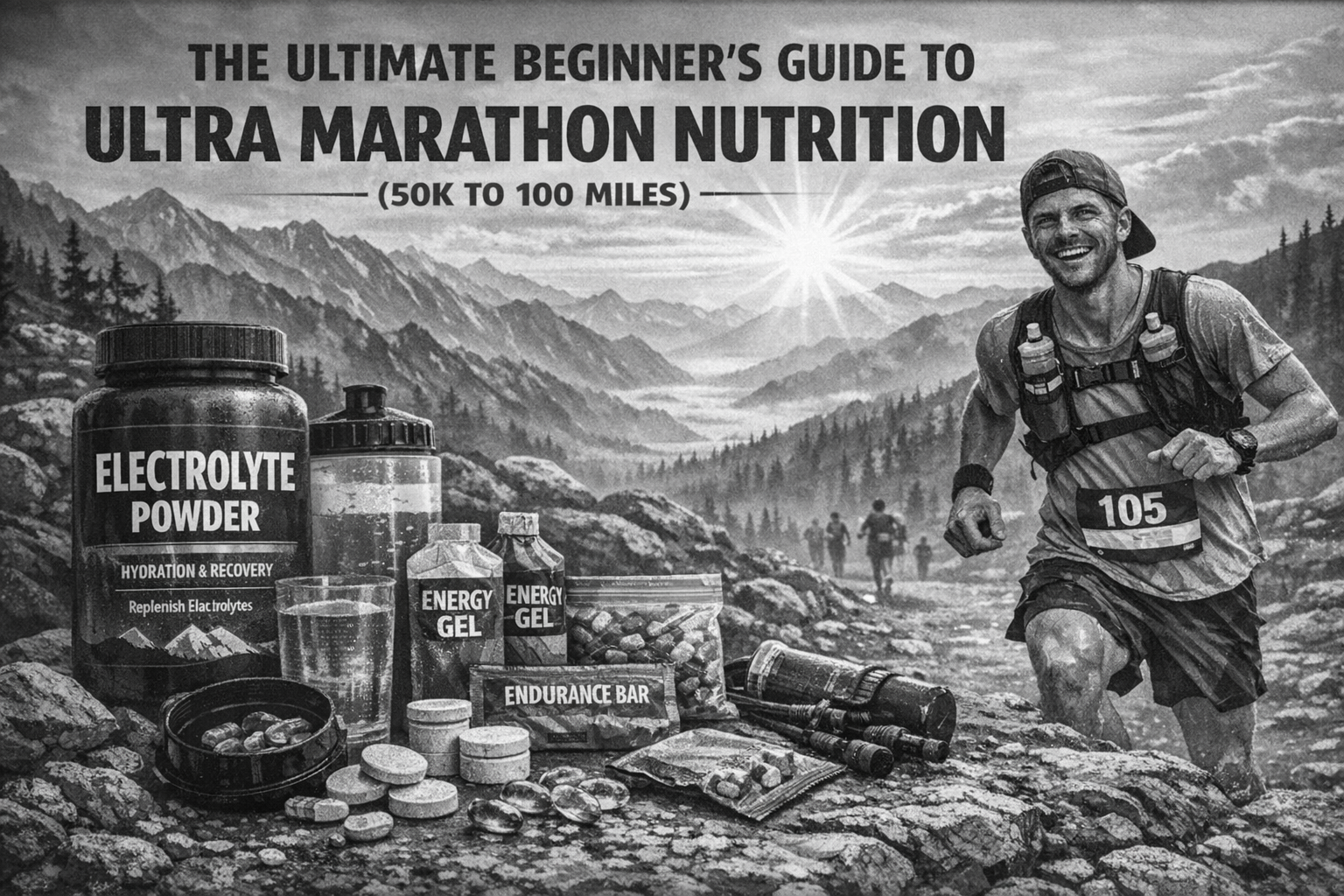
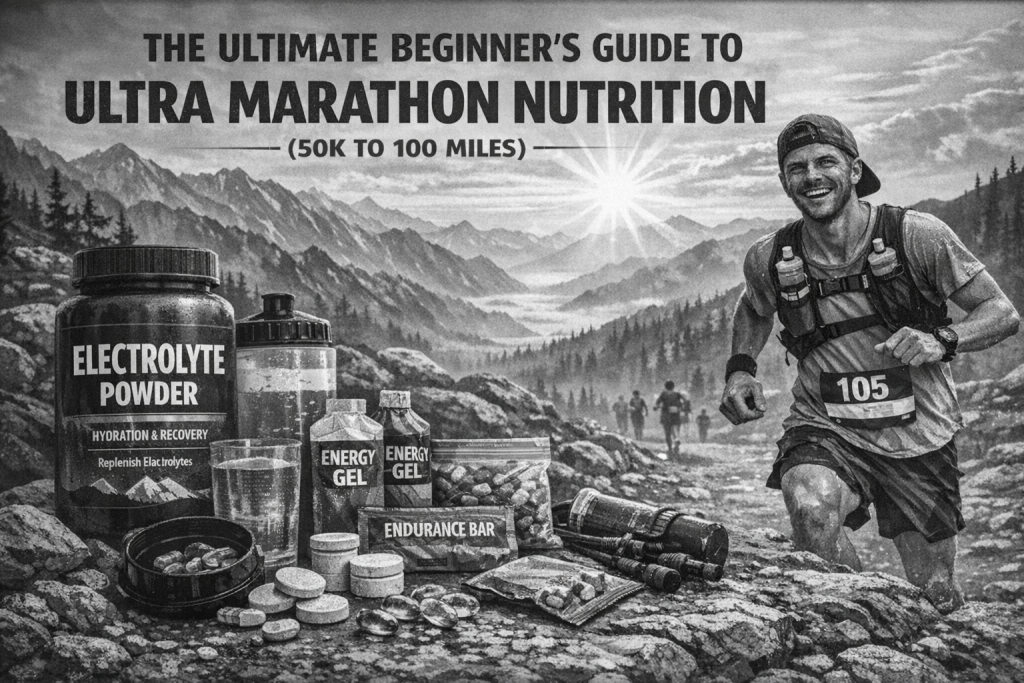
The Ultimate Beginner’s Guide to Ultra Marathon Nutrition (50K to 100 Miles)
By Ultrarunner.life – Sports Therapy & Running Coaching Experts
Introduction: Welcome to the Buffet of Suffering
If you’ve signed up for your first ultra-marathon, congratulations—you’ve officially decided that running a marathon just isn’t painful enough!
Now comes the real challenge: not the hills, not the distance, not even the questionable life choices… but eating. Constantly. While running. For hours. Sometimes days.
Ultra marathon nutrition is the difference between feeling like a durable mountain goat and a melted candle somewhere around mile 37.
This guide is your one-stop, no-nonsense (okay, some nonsense) beginner’s roadmap to fueling your body for races from 50K all the way to 100 miles.
We’re going deep. Science, real-world experience, mistakes (so many mistakes), and practical strategies you can actually use.
When planning your hydration strategy, remember no plan survives first contact with the enemy! Stick to your plan but adjust accordingly. If you are thirsty, drink more. Same for nutrition, if you are hungry, put a little more fuel in. If at any point you are concerned and your health may be at risk, seek assistance from other competitirs, medical staff, or call the race director on the emergency number. Always have an ICE contact on your race number and in your phone!
There are reasons races like UTMB Arc of Attrition get renamed Arc of Nutrition! They are a great reason to consume a lot of food that we might normally avoid, but doing it in the right way is where it gets interesting.
Why Nutrition Matters More Than Your Fancy Shoes
You can have the best shoes, watch, and training plan—but if your nutrition fails, everything fails.
In ultra running, you are essentially:
- Burning 400–800+ calories per hour
- Depleting glycogen stores within 60–120 minutes
- Losing electrolytes through sweat
- Gradually questioning your life decisions
Nutrition and hydration are not optional—it’s performance-critical.
The Golden Rule: Eat Before You’re Hungry, Drink Before You’re Thirsty
Simple? Yes. Easy? Not at mile 62 when your brain thinks a gel is a personal attack.
But this rule is everything.
Set a timer. Follow a schedule. Future-you will be grateful. I like to set two one every 10 minutes to hydrate, one every 30 minutes to eat. In 50k's I like to eat every 20 minutes as the pace is slightly higher.
Understanding the Basics: What Your Body Needs
Carbohydrates: Your Primary Fuel
Carbs are king. Emperor. Supreme ruler.
- 60–90g/hour standard
- Up to 120g/hour with gut training
Multiple transportable carbs (glucose + fructose) increase absorption. SIS and Enervit come in convenient 40g, Stryky do a 50g option as well!
Fats: The Slow-Burning Backup
Useful in longer events but not fast enough alone.
Protein: The Repair Crew
Helpful in events over ~6–8 hours
- 5–10g/hour can reduce muscle breakdown
Electrolytes: The Silent MVP
Without sodium, everything falls apart. Electrolye tablets and drinks often give 300-400mg of sodium per hour, we tend to lose between 1000-1700mg per hour, especially on warmer days. This where you can either opt for a Precision Hydration 1000/1500mg tablet or get your sweat loss tested properly (we can help with that).
Fuelling by Distance
50K Strategy
- 200–300 kcal/hour
- Mostly carbs
- Minimal solids
50 Mile Strategy
- 250–350 kcal/hour
- Introduce real food early
100K Strategy
- Mix liquids + solids
- Aggressive carb intake
100 Mile Strategy
- 300–400+ kcal/hour
- Include protein + fats
- Plan for night eating
Hydration: The Fine Line Between Smart and Sloshy
- 400–800ml/hour
- Adjust for heat
Signs you’re off:
Too little: dizziness, dark urine Too much: bloating, confusion
Electrolytes: Don’t Skip This (Seriously)
- Sodium: 300–800mg/hour
- Increase in heat/sweat-heavy runners
Gut Training: The Skill Nobody Talks About
Train your stomach like you train your legs.
How:
- Practice race fuelling in long runs
- Build up carb tolerance
- Try worst-case scenarios
Yes, it’s uncomfortable. That’s the point. I once did 20 miles on a treadmill, ate sweets and crisps every 15 minutes, just to see what I could do. Train with the nutrition that you plan to race with, and make sure you do this with the same hydration, at the same intensity, and same environmental conditions that you might face on race day.
Pre-Race Nutrition Strategy
48 Hours Before
- Increase carbs
- Reduce fibre (avoid “emergencies”)
Race Morning
- 300–600 calories
- Low fibre, familiar foods
Race-Day Nutrition Checklist (Save This!)
- ✔ Fuel plan written down
- ✔ Backup foods packed
- ✔ Electrolytes ready
- ✔ Bottles/flasks pre-filled
- ✔ Timer set for eating
- ✔ Drop bags organised
- ✔ “Emergency snacks” (the emotional support kind)
Post-Race Recovery Nutrition
Immediately
- Carbs + protein
First 24 Hours
- Rehydrate
- Eat balanced meals
Also: celebrate. Preferably with something greasy.
Caffeine Strategy: Rocket Fuel (If Used Right)
Caffeine is a powerful performance enhancer—but it can backfire.
Benefits
- Reduced perceived effort
- Increased alertness
- Improved endurance
Strategy
- 1–3 mg/kg doses
- Use later in race (not all at once)
Warning
Too much = jittery disaster + stomach issues
Supplements for Ultra Runners
Useful
- Electrolyte tablets
- Energy gels/chews
- Caffeine
Situational
- BCAAs (very little evidence that these do much at all but wanted to include them as some people disagree)
- Beta-alanine (more for shorter events and make sure you test them, they often come with caffeine if in can form)
Not Magic
If your nutrition plan is bad, no supplement will save you.
Gender-Specific Nutrition Considerations
Female Athletes
- Higher risk of low energy availability
- Iron levels critical
- Hormonal fluctuations affect fuelling needs
Male Athletes
- Often under fuel early (ego issue, let’s be honest)
Key Takeaway
Personalisation matters more than gender stereotypes.
Dealing with Common Problems
Nausea
- Slow down
- Switch to liquids
- Try ginger (can be chewable or lozenges)
Cramping (if serious then seek medical attention or call race organisers)
- Increase sodium
- Adjust pacing
Bonking
- Eat immediately
- Reduce intensity
Building Your Personal Plan
- Calculate calorie needs
- Test in training
- Adjust for terrain/weather
- Build variety
- Keep it simple
Advanced Tips from Ultrarunner.life Coaches
- Variety prevents flavour fatigue
- Real food becomes essential over time
- Walk breaks help digestion
- Don;t take on nutrition with high HR or on hills)
- Small, frequent fuelling beats large doses
The Psychology of Eating During Ultras
At some point, eating becomes emotional.
You’ll hate food. Then love it. Then hate it again.
That’s normal.
Sample Nutrition Plans
Beginner 50K
- Gel every 20-30 min
- Electrolytes hourly
Intermediate 50 Mile
- Mix gels + real food
- 250–300 kcal/hour
100 Mile Plan
- Rotate sweet + savoury
- Include warm foods at night
Final Thoughts: Eat Like Your Race Depends on It (Because It Does)
Ultra nutrition is messy, personal, and constantly evolving.
The goal isn’t perfection—it’s consistency.
And maybe not crying over mashed potatoes at mile 80.
I have written a small article on my personal nutrition strategies that you might to borrow something from:
Scientific Research Studies
- Jeukendrup, A. (2014). A Step Towards Personalized Sports Nutrition.
- Burke, L. M. (2015). Re-examining High-Fat Diets for Sports Performance.
- Stellingwerff, T. & Cox, G. R. (2014). Carbohydrate Supplementation.
- Hoffman, M. D. (2015). Hydration in Ultra-Endurance Events.
- Costa, R. J. S. et al. (2017). GI Issues in Endurance Athletes.
- Pfeiffer, B. et al. (2012). Carbohydrate Absorption.
- Sawka, M. N. et al. (2007). Fluid Replacement.
- Cermak, N. M. (2013). Protein & Endurance.