
Nutrition Strategies......
There are so many theories on what nutrition strategy you should adopt for different types and length of race, high carb, no carb but fats, hybrid......but what's right? Should you use sports nutrition products, make your own, Jelly Babies and Haribo, solid foods, fluid based, does it matter? There are a few key points every athlete should consider in my opinion, and my opinion is my own, tested by me, the athletes I train, and in no way the only way to approach your race nutrition strategy. I offer you food for thought (apologies):
- Always train with the race nutrition you plan to use for the race.
- Train with the same amount of nutrition you plan to use in the race to test tolerance.
- Train with the same nutrition strategy over the longest distance runs in your training plan before your race.
- Build up your tolerance to the product by using it in shorter training runs as well, in a way that supports the session you are trialing it on.
- Use the nutrition in a similar environment and temperature that you will experience on race day.
- Never, I repeat never feed them after midnight.....oh wait......don't take too much caffeine in late afternoon/evening sessions if you want your 8 hours sleep for recovery.
- For ultra and multi-day races, especially desert events, use a combination of flavors and types just in case your tolerance changes. You aren't going to run 100 miles in training, but your ability to stomach gels after 50k might change and probably will!
- Test different strategies, intervals of intake, amount of carbs, brands. because you never know what might give you a personal edge.
- Focus on session prep and recovery strategies as part of your nutrition plan.
- Be considerate of vitamins and supplements that may support recovery and performance.
That's my starting point, I'm not going to tell you what to do, I just want to give you some things to consider when starting to think seriously about nutrition.
Unless you have trouble with tolerating sports nutrition, or you've had negative outcomes with products at races, you probably don't need to pay a nutritionist to do complex tests and write you a plan, unless you find an athlete who is a nutritionist, they won't know how a race affects you, you know you better than anyone else. I know I can't stand egg whites, so I won't be drinking those as a recovery drink, I won't be carrying boiled eggs on a 50 miler, and I won't even order a fried egg in a cafe because it's embarrassing to leave the white on the plate, I do eat scrambled so there's my solution to our first negative nutrition scenario!
Another issue with nutrition is that it's expensive, you may want to choose what sessions you trial a strategy in, I would pick long runs, and maybe interval sessions where you are stressing your system more, blood flow is directed away from the gut in higher intensity sessions, and your ability to digest a product will be tested. Again, I wouldn't ingest 4 gels in 30 minutes, but I might use one 20 minutes before the session, one at 20 minutes, one at 40 minutes, and then try and drink an electrolyte drink at 10 minute intervals. I wouldn't do this every interval session, but I would give it a go. This may not be to every coaches taste, but it is how I test myself. I did once do 3 hours on a treadmill and eat 100 calories of a variety of sweets, crisps, and chocolate every 15 minutes to see how much I can stomach, apparently all of it with no issues. Not very scientific but it did provide me a psychological confidence that I could probably eat practically anything at a race. 3 weeks later I ate chips, pasta, and pizza at every aid station of the Arc of nutrition....I mean Attrition.
Recovery products are a favourite of mine, I use SIS Beta Recovery after nearly every session, it contains a balanced protein/carbohydrate mix with electrolytes. Does it work, I think so, maybe it's placebo but then that's still a positive thing. There are many other products that do the same, you could use a scoop of protein powder in semi-skimmed milk, add a banana for good luck, and there you have a tasty shake, it also has what the plants need......electrolytes. Another firm favourite of mine ia=s a bottle of Yazoo chocolate milk shake or a Starbucks protein iced latte. At the end of the day, it gets dark, and you need to test and then use what works for you!
I also use a few performance enhancing supplements, legal, but I think they work brilliantly. Nomeo, Broccoli sprout extract, lactic acid buffer, and for me reduces the discomfort of hard intervals. Try it, I think you'll be surprised, and it is worth stating it has a palatable but odd taste, liken it to doing a shot of tequila. The down side, it's £5 a shot and you need to take it 2-3 hours before the session. The effect lasts for me for about 2.5 hours, maybe not of huge benefit for long runs and races over half marathon distance.
Bi-carb, it feels like this has been re-discovered as a performance supplement, the way it is consumed has changed, but the effect is the same. Back in 2010 I purchased a bottle of bi-carb tablets from ZipVit, took 4 a day for a week, the effect was the same as Nomeo, endurance efforts felt easy, harder race sections didn't hurt much at all, generally felt amazing. Today the way it is consumed has changed, and it is a lot more expensive. You take the specified amount in a gel, the bicarb can be in little tablets (reduces the salty taste), about 90 minutes before your race. This product should be tested, it can be heavy on the stomach for some people, or even the tolerant at inconvenient moments. Megan Roche had what she called a bicarb cholera moment right before a race. Let's go back to point 1 in our initial list!
Vitamins and supplements should be based on general guidelines and medical advice, sometimes with getting a blood test done to check levels and rule out any contraindications to use. CurranZ is the most interesting, it supports recovery and is made from New Zealand black currants. A normal multi-vitamin is a good idea, some may opt for pricier sports specific ones, I use a cheap one from Amazon. I'm a fan of collagen, for tissue health, I'm not sure if I feel the benefit but I recover pretty well and I'm not in bad shape for 48. I had a blood test that said I was a little low on vitmain D, I take a 4000iU tablet of D3. I also take a calcium, zinc, and magnesium supplement to help with electrolyte levels, no medically indicated, it hasn't killed me yet. Get medical advice to support any vitamin supplementation (just covering my arse).
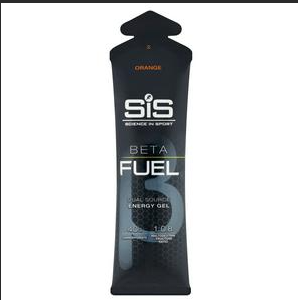
I use between 100g and 120g of carbs per hour during races, that doesn't change on race distance for me but you may decide differently. I built up to that by using lower dosage gels at my ingestion intervals. I will try to use 3 gels per hour, you could start with one or two, and build up the dosage based on gel sizes. For example, I might use an Enervit 20g caffeine gel prior to training or racing, then use an SIS Beta gel every 20 minutes, they have 40g of crabs per gel, I would start on the 20 minute mark, only changing the strategy if I'm bored of the flavour or fancy some solid food. I might also swap every 3rd gel for a caffeine gel, usually an Enervit as it only has 20mg of caffeine, I will accept the loss of 20g or carbs and tale the 100g an hour I'm still consuming. Another option is the 50g Strykr gel, you could opt to take one every 30 minutes and still meet the 100g of carbs target. Precision gels are 30g each or you can opt for the 90g pouch, you could use a 3rd of that every 20 minutes for a slightly lower 90g carb target, this might be better for longer ultras where you probably don't need 100/120g.
You could swap gels for fluids, I like Tailwind, there are 90g in one sachet, that's an hours nutrition if you can't stomach gels for a while. You could also throw in a Stroop waffle from Gu, they are a great solid food option but still made from sports nutrition ingredients. There are also the old favourites, jelly babies, Haribo, banana, or a jam sandwich, just throw them in for a change or when you can't deal with the other products. You have to plan for aid stations and the race provided nutrition, check what they will offer and plan your strategy around that of you don't want to carry it all.
Hydration wise I'm a simple creature, I use an electrolyte tablet, SIS/Precision/High5 in 650ml of water every hour, I will amend this on distances between aid stations and heat, sometimes I might drink 2. In desert races I will chew a saltstick chew every hour as they only provide water at aid stations.
David Roche is an amazing athlete and person, follow him for top info, join the Patreon for his podcast SWAP, Some Work all Play, and listen to every podcast episode, David and Megan will teach you a lot, and make you laugh! His recent video on high-carb fueling tips is great, take a watch:
The 8 Rules For High Carb Fueling
I hope some of this info is useful, for more specific training and nutrition plans please reach out via the contact form. Thanks for reading and happy running!