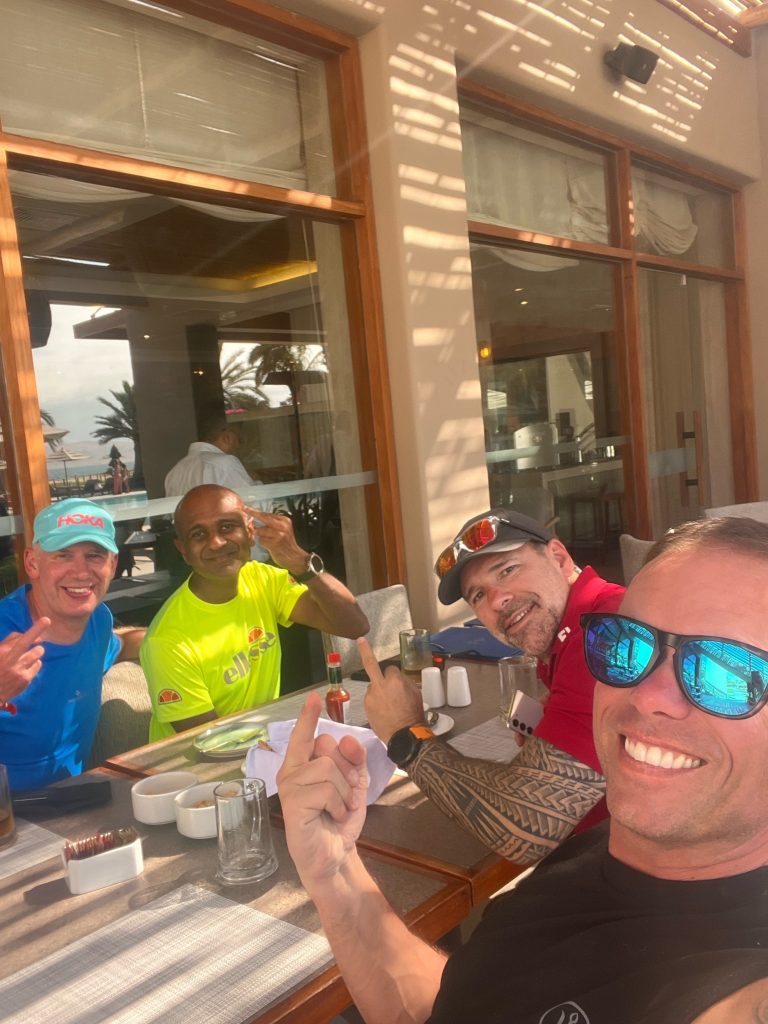
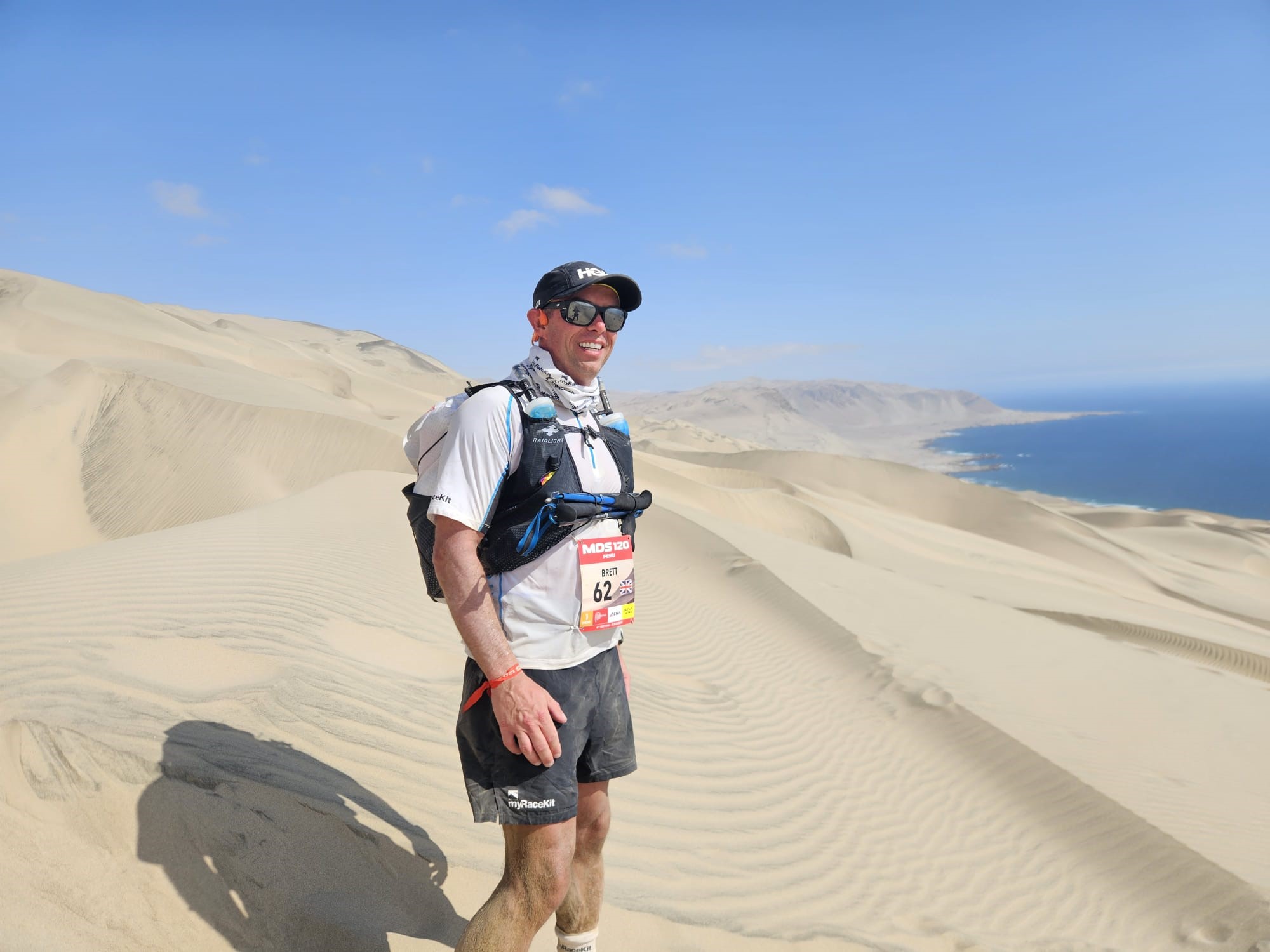
MDS 120 Peru December 2025
Marathon des Sables Peru 120 km – Race Report
By Brett Lewis
I’m not sure how to start this report, so many things that need to be covered, some may be interesting to some, others may not care at all. I will try and cover everything I feel is important to me, and the things I may help others that are thinking of taking on a multi-stage desert race.
I want to start with a little note about equipment, this is probably the hardest part to get right for a self-sufficient race, once you are on the start line, you can’t get amazon to drop off anything you might have overlooked. What I would suggest is to make your own mind up on what is important, review all the advice you can get from multiple sources, and settle on what you feel comfortable with (or without).
I may be biased being an ambassador of myRaceKit but without them I would have struggled when I did my first MDS 120 even in Jordan in 2024. They provide everything from shoes, Velcro services to attach your gators to your shoes (do not try this at home, it doesn’t end well does it Hari?), running vests, sleeping bags and mats, desert specific clothing, cooking equipment, pre-packed food services, and among other necessary kit, the mandatory equipment required to pass kit check. MDS do provide a list of what you need, but this isn’t always easy to understand. myRaceKit have been doing this a very long time and the shop was originally founded by Elisabet Barnes, twice winner of the MDS Legendary. The shop is also staffed by very knowledgable ultra runners, all competitive, and competent, with years of experience to impart on the customers that visit in person, call, or read the blogs on the website.
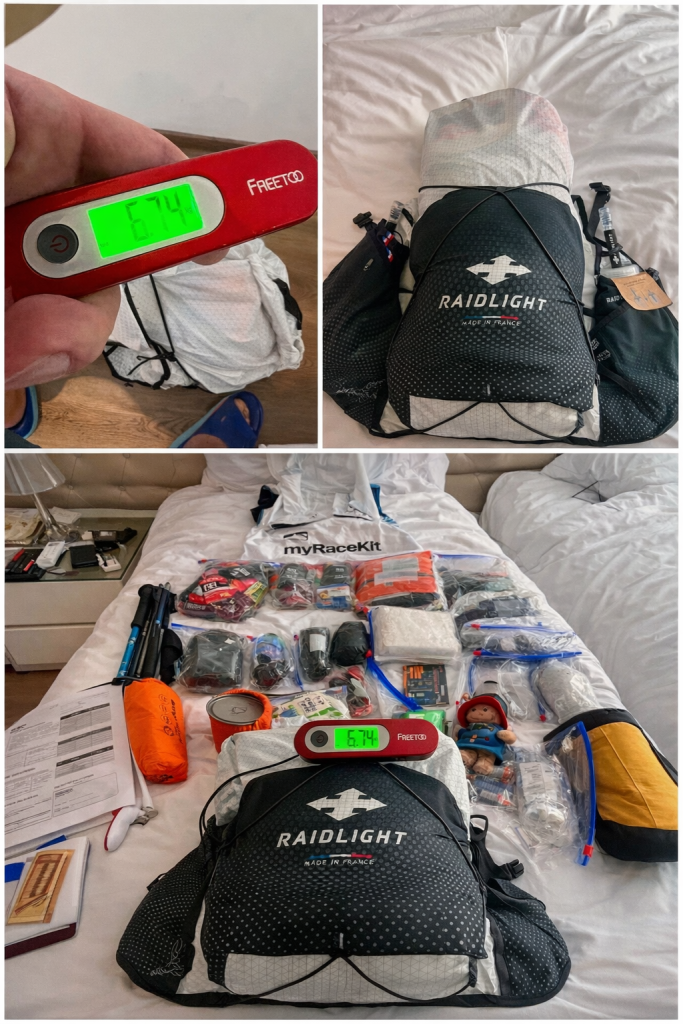
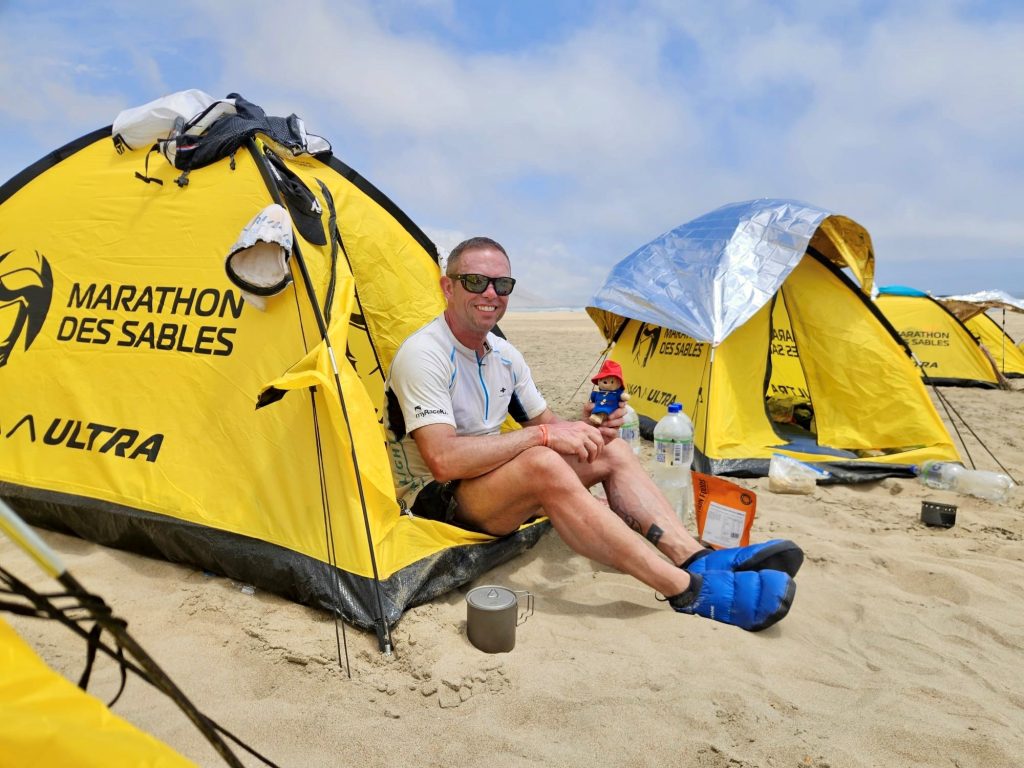
I won’t add a copy of the mandatory kit list, but the picture above will give you an idea of the vast amount of equipment required, and if you purchase wisely, can easily fit into a 24L race vest, and weigh a comfortable weight that won’t break your back during the initial stages of the race!
One top tip, don’t forget to apply suncream daily, even on the rest day! A lovely Canadian chap that we had been socialising with before the race, and on the coach, approached me during day two and informed me that my calf muscles were practically glowing red, at that point it was a bit too late, it didn’t stop me applying my LifeJacket factor 50 stick in an abundance, so much so it stayed on from day two until we got back to the hotel and I had showered twice!
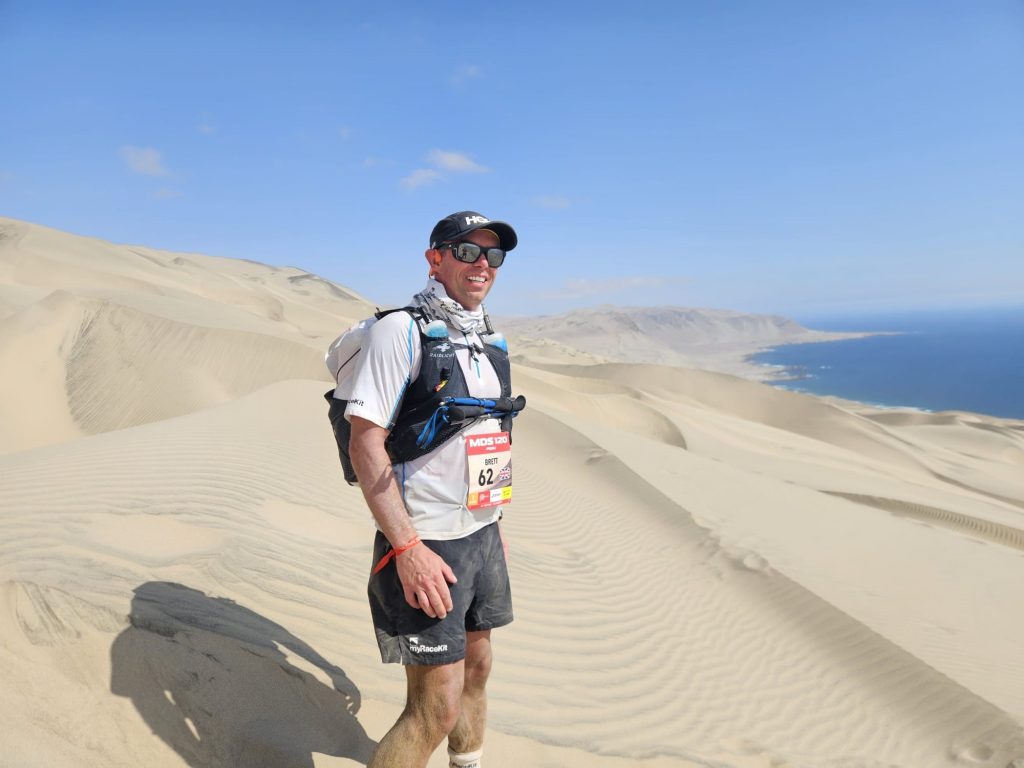
Here we go……
Standing on the start line in the Ica desert, a Raidlight Ultralight pack (loaded to 7.5kg including water) on my back and sand stretching endlessly in front of me, it finally hit home: this was finally happening, no more questions, we would find out if I was again ready for this task. Months of preparation, logistics, and mental build-up had led to this moment, the Marathon des Sables Peru 120 km, a self-sufficient ultra race through one of the most unique landscapes I’ve ever seen. What hid underneath the excitement was apprehension, and a little fear. I had acquired a hip injury back in September that an MRI suggested was an avulsion injury where my psoas muscle attached to my femur. Sensibly, I had reduced my training, cross trained, rested, and rehabilitated the injury, and arrived at the start line injury free, but I felt that I had maybe undertrained a little. My coach Lea Mulligan had modified my training in such a way that I was still training, but had removed running, and added the stair climber, weighted walking, some very light but specific weight training, and a lot of uphill weighted treadmill sessions.
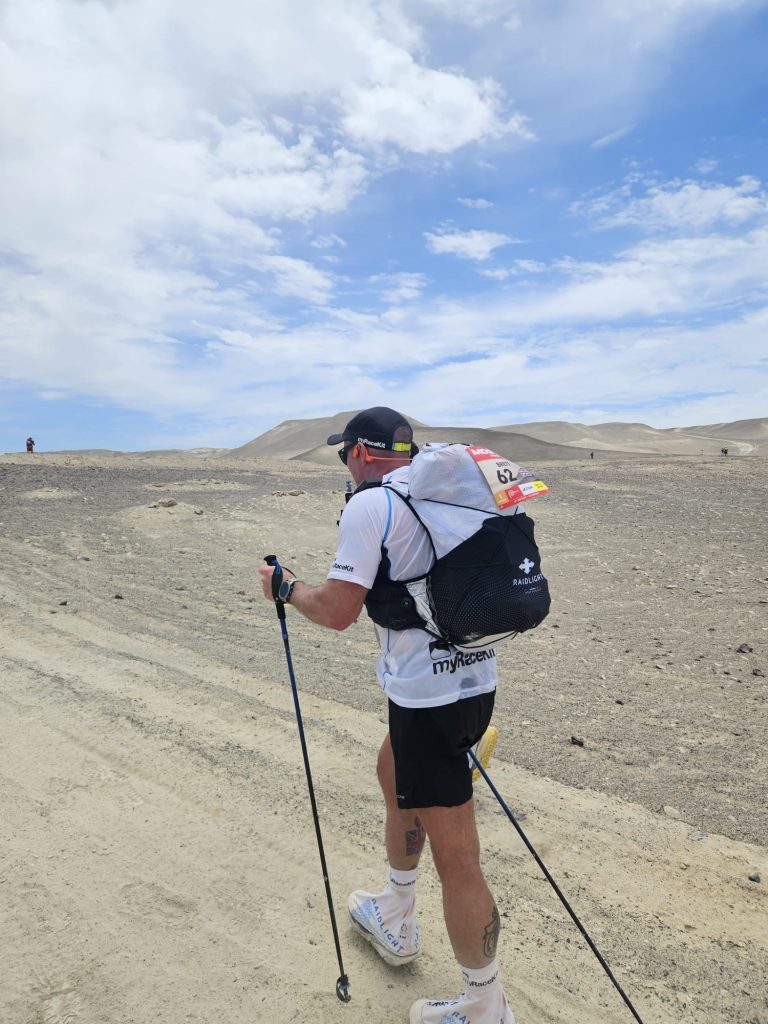
Stage 1 – Finding Rhythm
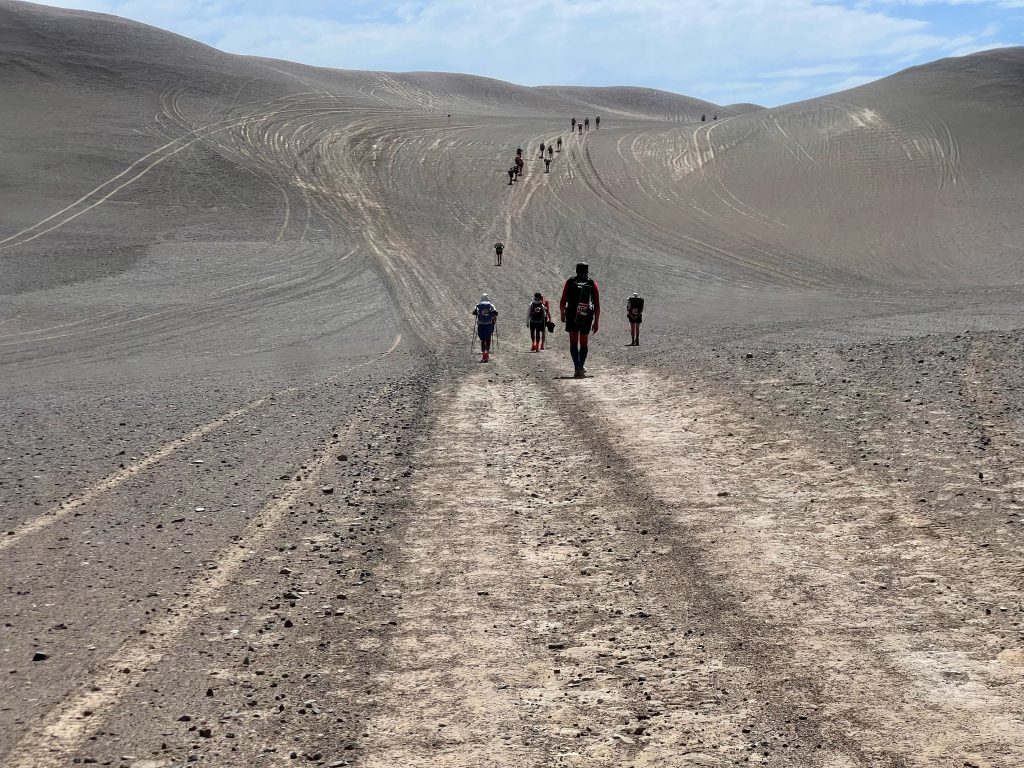
The opening stage eased us into the race, but only just. Soft sand underfoot immediately demanded respect, and I had to remind myself to hold back. Unfortunately Jason Simeon (my running partner, that I met at Jordan MDS 120 in November 2024) and I decided we were going to hit the runnable sections hard, and that we did! The desert has a way of punishing impatience, although the flats were runnable, there were some brutal 2-3k climbs that tested our patience. The terrain rolled between flat sections and dunes, with the coastal influence bringing wind that stripped any illusion of comfort.
We focused on efficiency, short strides uphill, steady breathing, eating regularly, and hydrating with water and electrolytes at specific intervals. Around me, runners from all over the world settled into their own inner battles, all with their own reasons for being there, and determination oozing from their pores (might have been sweat mixed with suncream but you get the idea). The Peru course (we were later told) is the hardest of the MDS 120 experiences, although there was a lot of uphill, notably a 3k climb that lost its appeal quickly, while a downhill that can only be compared with a black ski run was gifted to us 10k from the finish, that last stretch to camp was a torturous march across soft (sideways) sand that was memorable for all the wrong reasons. That first finish line brought relief more than celebration although camp was visible, it didn’t seem to get closer until the last kilometre. One stage down, many lessons learned.
On arrival at the camp, 5 litres of water signed for, the bivouac actually looking very appealing, the reality of self-sufficiency set in. At first celebration as team mates rolled in, starting the fires to cook food (and a little Starbucks powdered coffee), some self care including a check of the feet for blisters, rehydration of the apparent sweet and sour chicken and rice, kit unpacked and organised, and then a little time to enjoy the isolation of the desert and the beautifully calm surroundings. The desert doesn’t care how experienced you are, it demands attention, but it also gives you something special, you don’t enter the desert and then return the same person.
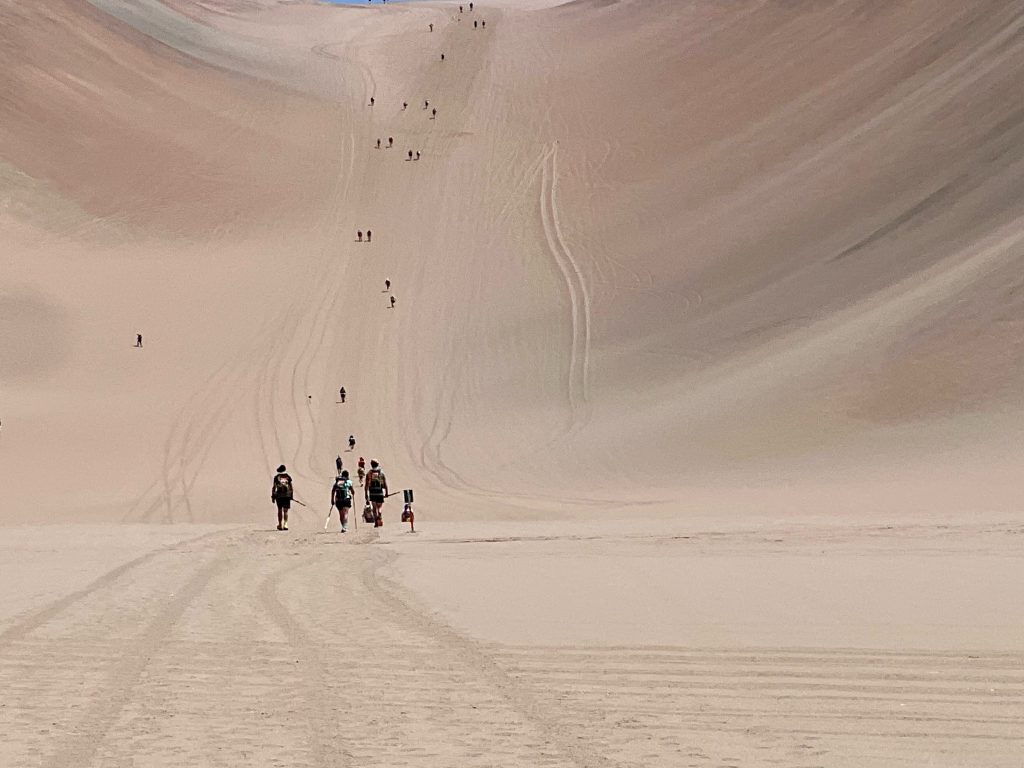
Stage 2 – The real test a.k.a the long day!
There’s an eerie mood in camp on the morning of the long day, it didn’t matter whether you had chosen 60k, 40k, or 20k, there were surprises revealed at the race briefing. 60k had become 62, 40k was now 45, and the bigger shock 20k had become 30, people were looking nervous but excited. The majority of people had not done an MDS event before, I really respect those people, it takes a lot to drop yourself in the middle of the desert for 4 days, not knowing if you are ready for the challenge.
As the race progressed, the cumulative fatigue became impossible to ignore within the field. Jason and I started an hour after the main pack as we were in the top 30 (18th and 19th I believe) and we got to catch up with some of the other runners, and our team mates as the day progressed. Weirdly I felt great, the first day had not fatigued me at all, and I’m good with the heat. The heat wasn’t brutal as the Sahara may be, but the sand, wind, and constant load of the pack slowly drains your energy. Every decision mattered: when to push, when to back off, when to eat, when to take on electrolytes, and more importantly when to use your poles.
There weren’t moments of doubt but the scale of the challenge we had set ourselves crept in. although I knew we could finish, we wanted to finish strong, and with enough left in us to hit the last stage fast. But there were also moments of absolute clarity. The two of us running across vast desert plains, with nothing but the sound of our breathing (occasional swearing) and the crunch of sand, was strangely grounding. It reminded me why I do these races. There is no place on earth that humbles you like a desert for so many reasons, but mainly that very few people will ever get to experience something like this in their lifetime. You also realise that you are living a moment that many will only ever dream of, or maybe they are just not able to.
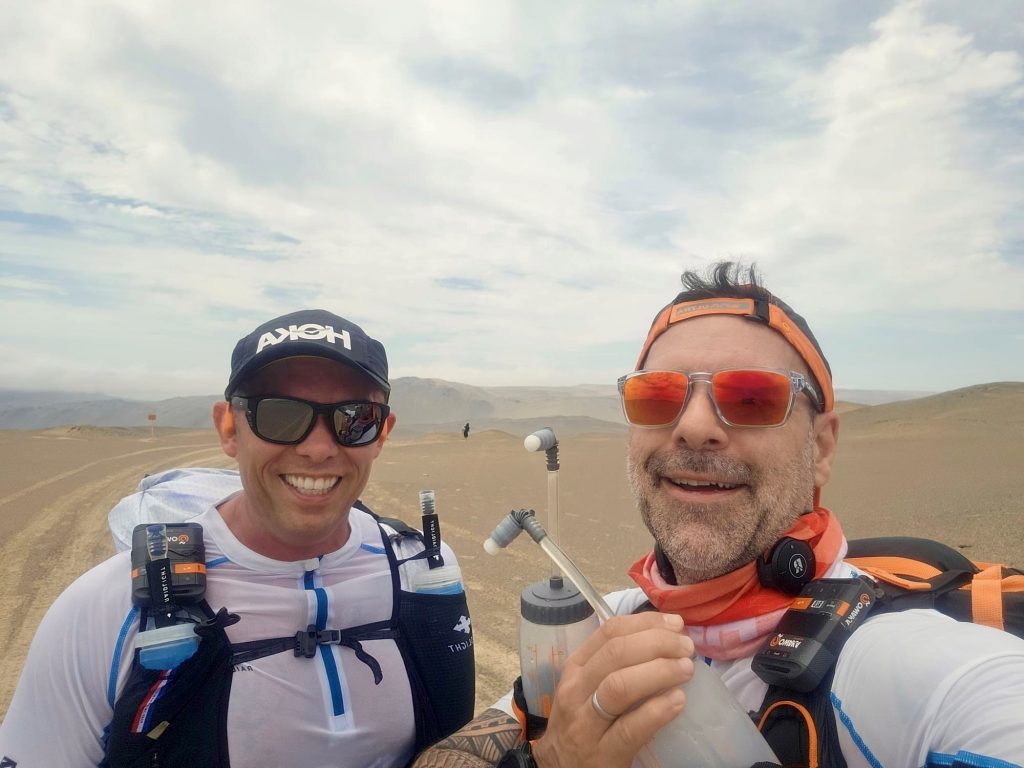
Camaraderie played a huge role, Jason and I knowing each other well enough to stay quiet when the mutual suffering occurs, or knowing when to joke a bit to lift each other out of a dark moment. A few words at checkpoints with the amazing volunteers and medical staff, shared nods on the trail with people you won’t recognise out of running gear and sunglasses, laughter back at camp with your fellow competitors. Everyone was hurting in their own way, and that shared suffering created an unspoken bond. What is lovely about these events is that the elite are no different from the back of pack runners, everyone provides support, shares items that they know will help a less fortunate runner complete the race (in our case super glue that Hari had brought along to self glue his Velcro to his shoes for his gators, later realising this was a school boy error, as its not as easy as it looks, moral of this story being, get it done professionally!). I can’t remember the appreciative glue receiver Irish chaps name, but he did make us laugh with his MacGyver style sleeping bag and shoes.
The course stretched runners across ever-changing terrain: hard packed flats, dune fields, and trails marked only by the horizon (and tiny orange flags). The desert’s heat moderate compared to Sahara editions, but wind and sand still made every kilometre feel earned.
The stage was definitely challenging, one female competitor saying that the 80k day in MDS legendary was actually easy compared to Peru’s modest 60k. There was a lot of climbing, not so much running, but finishing did bring a sense of achievement (and a little relief).
Rest Day
Day three is the only chance you get to kick back and recover a little. I’d like to say it is a day of rest, but it is far from it. There are covered areas with rugs to chill on, but if you are anything like me, sitting still is not a skill I have mastered. Organised yoga classes take place, in Peru you are able to take a long walk up the beach, some slightly odd people, that like freezing cold water, had a little swim!
The MDS crew like to provide a little surprise on the rest day, usually an ice cold can of coke. Peru held a bigger surprise, with all the excitement and chatter among competitors about the approaching cold drink being handed out, we received a massive shock, a cold banana and orange…….WTAF?
Towards the end of the day people start to discard anything that isn’t mandatory kit, or holds a value vs performance benefit. All excess food eaten, shared, donated to the local desert people of Peru, leads to a pack that is far easier to carry than at the start of the race. In fact, you hardly realise you are wearing one by the last stage.
Final Stage – Emptying the Tank
By the final stage, things do start to hurt but crossing the finish like is inevitable . The pack was lighter, the finish closer, and the mindset shifted from survival to execution of the final part of the plan. We ran with intent (well it felt that way, probably looked vastly different), soaking up the environment one last time, knowing these moments would stay with me long after the blisters healed.
Crossing the finish line was emotional. Not explosive joy — more a deep, quiet satisfaction. I had managed myself well, respected the race, and earned every kilometre. I finished thankful that my injury had recovered, my team mates had in some cases completed their first ultra and desert race, thankful for all the support from myRaceKit, my nearest and dearest, work colleagues, and all of the other participants.
Reflections
Marathon des Sables Peru was different from Jordan, I thought desert’s were all the same, but I was wrong. The contrast of dunes and ocean, the wind, the solitude, lack of rock formation, all added to the challenge. This race wasn’t about chasing a time; it was about focus, discipline, resilience, and adaptability. It was also about enjoyment and teamwork, we can all chase a time or position but the desert doesn’t always allow that. I think it’s important to be in the moment, the opportunity, and the experience that events like MDS provide. The best bit……no mobile phone reception for 4 days!
I left Peru tired, humbled, and grateful. Grateful for my body holding up, for the people I met along the way, and for the reminder that the hardest races often give the greatest clarity.
Another desert crossed. Lessons learned. On to MDS Legendary in April, a whole different ball game!
Top Finishers & Results
I’ve included the text below about finisher positions, not because I expect you to know the athletes mentioned (although Pauline is an amazing athlete, an amazing person, and a great source of coffee shops in Cusco). The reason being that when I started looking at how to structure this race report, I asked ChatGPT to provide a draft I could work from, as much as I didn’t use much of it, there was one part that made me super proud, and weeks out from the race made me quite emotional and nostalgic about being the 1st British participant across the finish line.
According to the UTMB World Series index results, the overall 120 km finishers list included:
🏅 1st Place (Men’s) – William Rebischung (France) — ~11:49:58
🥈 2nd Place (Men’s) – Franck Clarte (France) — ~12:43:19
🥉 3rd Place (Men’s) – Rafik Allou (France) — ~13:13:17
Among the women, notable performance included Pauline Thinus (France) finishing in ~13:30:42, placing high in the field. The results showed a strong European contingent while globally diverse participants made their marks across age groups and nationalities. Importantly, Brett Lewis (United Kingdom) appears on the finishers list in the Men’s 45-49 category — a solid performance against a tough field and formidable conditions.